Why Is My Gold Ring Turning My Finger Green or Black?
(Yes, Even Real Gold!)
We have all been there: you take off a beautiful gold ring after a long day, only to find a strange, dark green or deep black band stained onto your skin.
It can be alarming, especially if you paid a premium for real gold. However, rest assured—your finger isn’t having an allergic reaction. This discoloration is actually a very common chemical reaction between your skin chemistry, the metals blended into your gold jewelry, and your daily environment.
Here is a breakdown of why your yellow gold or white gold rings leave these mysterious green or black marks, and exactly what you can do to stop it.
Why Yellow Gold Can Turn Your Finger Green: Alloy Oxidation
Many people assume that a green finger means a ring is fake, but that is a myth.
Pure 24-karat gold is incredibly soft—so soft that it would easily bend, warp, and scratch if you wore it as a daily ring. To make it durable enough for everyday jewelry, jewelers must blend pure gold with other strengthening metals, creating an alloy.
- 14K Yellow Gold contains only 58.3% pure gold. The remaining 41.7% is a mix of other metals, usually copper and silver.
- 10K Yellow Gold contains even less pure gold (41.7%), meaning the majority of the ring is made of base metals.
If your finger is turning green, the culprit is almost always the copper blended into your yellow gold. When copper comes into contact with the natural acids and moisture on your skin, it undergoes a chemical process called oxidation. The copper reacts to your sweat, body oils, or hand lotions, creating a thin layer of copper carbonate. This powdery green residue rubs off directly onto your finger.
Why White Gold Can Turn Your Finger Black: Metallic Abrasion and Makeup
If the mark on your finger is dark gray or jet black—a problem very common with white gold—you are likely dealing with metallic abrasion, and your daily beauty routine is usually to blame.
To make traditional white gold look bright, silvery, and reflective, jewelers blend pure yellow gold with white metals like nickel, silver, or palladium, and then coat the entire ring in a precious metal called rhodium plating.
Over time, daily wear causes that protective rhodium plating to naturally wear thin. When this happens, the raw white gold alloy underneath is exposed to your daily cosmetics.
Cosmetics, lotions, sunscreens, and hairsprays contain microscopic abrasive chemical compounds (like zinc oxide or titanium dioxide). When these hard particles rub against a traditional white gold ring, they act like ultra-fine sandpaper. This abrasion leaves a dark gray or black residue behind, staining your skin right under the band.
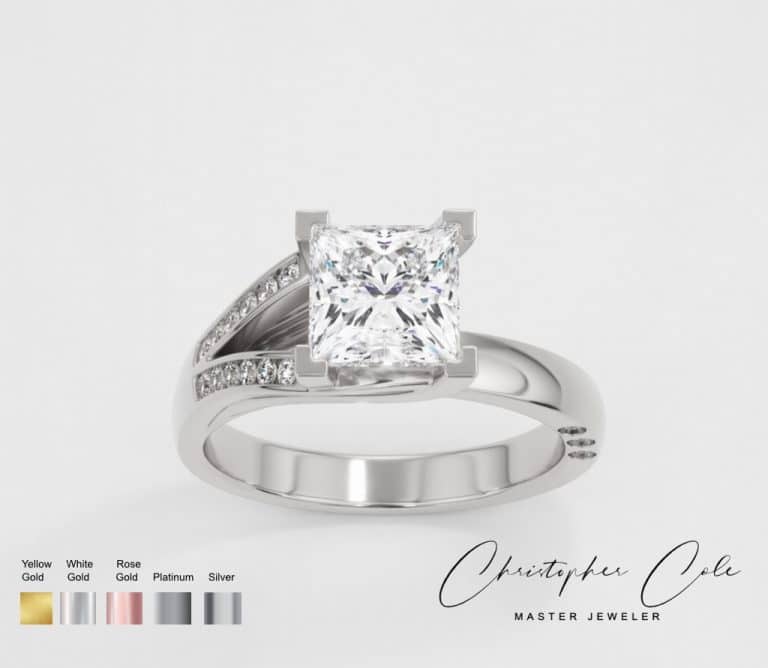
The Christopher Cole Alternative: White Gold That Never Turns Yellow
If you want to completely avoid the maintenance, yellowing, and eventual skin staining of traditional white gold, there is an expert solution. Christopher Cole of Jewelry by Christopher solves this issue entirely through custom metallurgy.
Instead of relying on temporary industry fixes, Christopher uses a specialized premium alloy for all of his white gold jewelry pieces. This unique formulation stays naturally bright white on its own and never turns yellow, which means it never requires rhodium plating. Because we use a premium alloy to keep a bright white color through and through, you never have to worry about a plating layer wearing off and exposing dull yellow tones or chemical alloys that discolor your skin.
Daily Culprits That Accelerate the Staining
Your skin chemistry changes daily, which is why a gold ring might stain your finger one week but not the next. The reaction speeds up drastically when exposed to:
- High Humidity and Sweat: Summer weather or intense workouts introduce moisture that speeds up oxidation.
- Lotions and Perfumes: Applying rings immediately after putting on hand cream traps active chemicals against your skin.
- Soaps and Sanitizers: Hand soaps and alcohol-based sanitizers can get trapped under the ring band, corroding the base metals and irritating the skin.
How to Prevent Your Gold Rings from Turning Colors
You don’t have to stop wearing your favorite gold pieces just because they leave a temporary mark. Use these simple tips to keep your skin clear:
The “Last On, First Off” Rule: Always make your jewelry the absolute last thing you put on in the morning (after your lotion, makeup, and perfume have completely dried) and the first thing you take off at night.
Keep It Dry: Take your rings off before washing your hands, showering, swimming, or doing the dishes. Never let moisture or soap get trapped underneath the band.
Keep It Clean: Wipe your rings down regularly with a soft microfiber cloth to remove built-up lotion, sweat, and skin oils before they have a chance to oxidize or grind against your makeup.
When to See a Professional Jeweler
If your traditional gold jewelry continues to turn your skin colors, it is time to skip the DIY hacks and bring it to a professional jeweler.
If you have a traditional white gold ring, a jeweler can re-rhodium plate the ring to restore its bright, hypoallergenic barrier over the base metals, instantly stopping the black residue from forming.
Alternatively, if you are tired of the constant maintenance and your white gold fading to yellow, you can consult a master jeweler like to discuss recreating your piece. Christopher specializes in custom redesigns, allowing you to remelt or trade your old, high-maintenance gold for a piece built with his signature, naturally bright white gold alloy that won’t ever stain your skin!